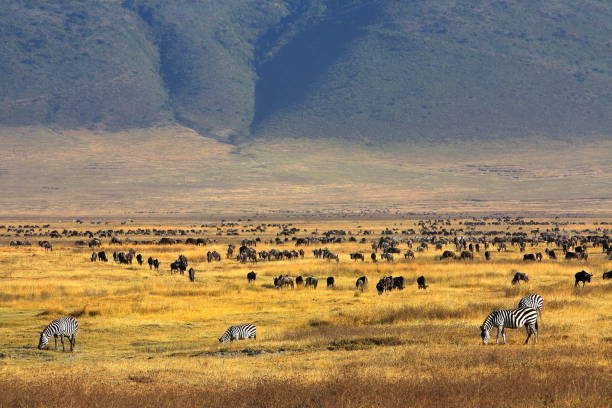
Ngorongoro Crater is not just a haven for wildlife; it is a place of profound cultural and historical importance. In 2010, UNESCO designated the Ngorongoro Conservation Area a Mixed World Heritage Site, one of only a handful worldwide to receive such a distinction. This recognition highlights the area's extraordinary blend of natural and cultural heritage, making it a destination unlike any other on earth.
The Cradle of Humankind
Just beyond the crater rim lies Olduvai Gorge, often called the "Cradle of Mankind." This remarkable archaeological site has yielded some of the most significant discoveries in the history of human evolution. It was here that Louis and Mary Leakey made groundbreaking findings in the 1950s and 1960s, unearthing fossils and stone tools that trace human evolution back nearly 2 million years.
The discoveries at Olduvai Gorge provided crucial evidence that human evolution began in Africa. The gorge is often referred to as the "Grand Canyon of human evolution" due to the rich layers of ancient sediment that have preserved fossils and artifacts for millions of years.
Laetoli: The Oldest Footprints in the World
Nearby, at Laetoli, one of the most extraordinary archaeological discoveries ever made was found. In 1976, Mary Leakey's team discovered a trail of hominid footprints pressed into volcanic ash. These footprints, estimated to be approximately 3.6 million years old, provide the earliest evidence of upright walking (bipedalism) in human ancestors.
The Laetoli footprints are a truly remarkable window into our distant past. They show that our early ancestors walked upright on two feet, with a gait very similar to modern humans, millions of years earlier than previously thought.
| Site | Discovery | Significance |
|---|---|---|
| Olduvai Gorge | Early hominid fossils and stone tools | Evidence of human evolution dating back nearly 2 million years |
| Laetoli | Hominid footprints in volcanic ash | 3.6-million-year-old evidence of upright walking |
The Living Maasai Culture
The Ngorongoro Conservation Area is also the ancestral home of the Maasai people, who have lived in the area for over 200 years. The Maasai continue to practice traditional pastoralism within the conservation area, grazing their cattle alongside the abundant wildlife.
The Maasai people are known for their distinctive red shukas (robes), intricate beadwork, and their deep connection to the land. The Maasai have coexisted with wildlife for generations, and their presence adds a rich cultural dimension to the Ngorongoro experience.
The Ngorongoro Conservation Area is unique in that it allows the Maasai to continue their traditional way of life within a protected wildlife area. The Maasai have access to water and grazing land for their cattle, and they live in villages within the conservation area, maintaining their cultural traditions.
Visiting a Maasai Village
Many visitors to Ngorongoro choose to visit a Maasai village to learn about their way of life. These visits offer a fascinating insight into a culture that has remained largely unchanged for centuries. Visitors can learn about traditional practices such as:
- Cattle herding: The Maasai are pastoralists, and cattle are central to their way of life, providing food, wealth, and social status.
- Traditional dress: The Maasai are known for their striking red shukas and intricate beadwork, which holds deep cultural and symbolic meaning.
- Jumping dance: The Maasai are famous for their jumping dance, which is performed by young warriors as a display of strength and agility.
- Boma construction: Maasai traditional houses, called bomas, are constructed from a framework of wooden poles and mud, with roofs made from cow dung.
The Maasai have been an integral part of the Ngorongoro landscape for centuries, and their presence is a vital part of the area's cultural heritage.
A Unique Blend of Nature and Culture
The Ngorongoro Conservation Area offers a rare and precious opportunity to explore both the natural wonders of the crater and the rich cultural heritage of the Maasai people and the ancient history of humanity. This blend of wildlife, landscape, and culture is what makes Ngorongoro so special and why it has earned its status as a UNESCO Mixed World Heritage Site.
Visitors to Ngorongoro can experience not only the thrill of safari but also a profound connection to the history of humanity and the living traditions of an ancient culture. This is a place where the stories of nature and humanity converge, creating an experience that is both humbling and unforgettable.