How old are Kondoa Irangi rock paintings? Journey through Tanzania’s ancient rock art, dating back 2,000–6,000 years, with Natured Safaris and Vacations.
Imagine standing beneath a granite overhang on the eastern slopes of the Great Rift Valley. The air is warm, the land stretches toward Kolo village, and above you, painted on the rock face, are figures that have watched over this landscape for thousands of years. Some are hunters with bows drawn. Some are dancers frozen mid-step. Others are cattle, giraffes, and strange, elongated spirits. These are the Kondoa Irangi rock paintings — and the first question almost every visitor asks is simple: how old are they?
The answer is not a single date. It is a story that unfolds over thousands of years.
A Gallery Painted Across Millennia
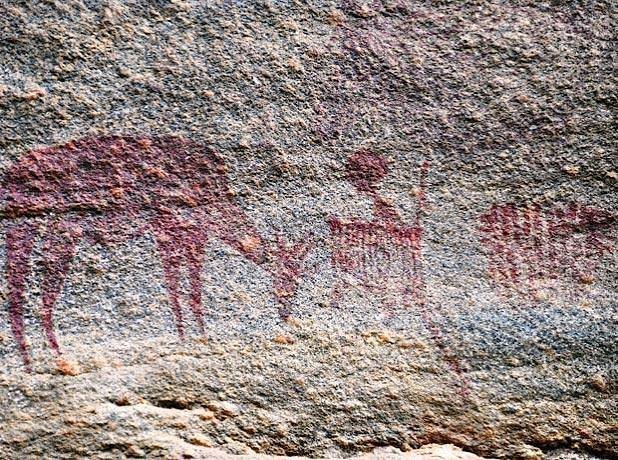
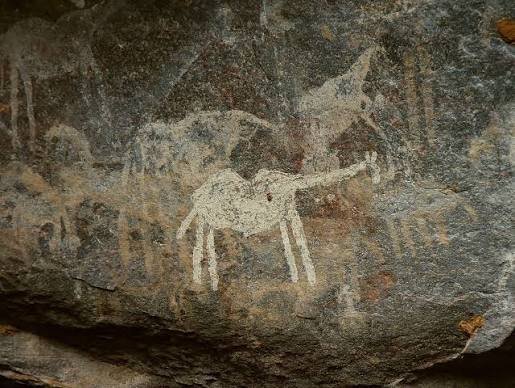
The Kondoa Irangi rock art sites, located in Tanzania’s Dodoma Region near Kolo village, are not the work of one artist or one generation. They are a layered archive of human life, created, added to, and repainted over a vast span of time. Most experts believe the paintings are between 2,000 and 6,000 years old. Some estimates, however, suggest that the earliest images could be more than 10,000 years old, placing them among the oldest known rock art in Africa.
That range may sound wide, and it is. Dating rock art is difficult. Unlike bones or tools, paintings cannot always be tested directly. Researchers rely on radiocarbon dating of nearby organic remains, stylistic comparisons, and the cultural sequences of the people who lived in the region. What emerges is not a precise birthday, but a long, slow unfolding of artistic and spiritual expression.
The First Artists: Hunters and Gatherers
The oldest layers of Kondoa Irangi art are believed to have been created by hunter-gatherer communities, possibly ancestors of the Sandawe people, who still live in the region and speak a click language. These early artists painted what they knew: the hunt, the forest, the animals they followed, and the rituals that gave their world meaning. Their figures are often slender and dynamic, painted in red ochre, white, and black. They captured motion in a way that still feels alive today.
Later Artists: Herders, Farmers, and Spirits
As centuries passed, new communities moved into the Irangi Highlands. Agro-pastoralists, including ancestors of the Warangi and Wasi peoples, added their own images to the rock shelters. Cattle began to appear more frequently. So did ceremonial scenes, abstract symbols, and figures that seem to bridge the human and spiritual worlds. The paintings became a conversation across generations — one people adding to the visions of another.
This is why Kondoa Irangi is so important. It does not just show what one group saw. It shows a transition: from hunting to herding, from wandering to settling, from one way of life to another. The rock walls became a diary of survival, belief, and change.
What the Paintings Tell Us
The images at Kondoa Irangi include elongated human figures, hunting scenes, dancing ceremonies, cattle, giraffes, elephants, and mysterious geometric signs. The colours — red, white, and black — were made from ochre, animal blood, plant sap, and ostrich eggshell. Each painting is a fragment of a vanished world, but together they tell a powerful story of how people understood nature, animals, spirits, and each other.
UNESCO Recognition and the Weight of Time
In 2006, the Kondoa Irangi rock art sites were inscribed as a UNESCO World Heritage Site. This recognition confirmed what local communities and scholars had long known: these paintings are a treasure of outstanding universal value. There are an estimated 150 to 450 decorated rock shelters, caves, and overhanging cliff faces in the Kondoa area, making it one of the densest concentrations of rock art in East Africa.
A Living Heritage, Not Just an Ancient One
For the Warangi, Wasi, and Sandawe peoples, these sites are still sacred. Some rock shelters are used for rain-making ceremonies, healing rituals, and ancestral prayers. Offerings may be left. Elders may gather. The paintings are not simply old — they are alive with meaning. That is why visitors must treat them with respect. Touching the paintings is strictly forbidden. Guides from the Kondoa Antiquities Office accompany all visits, protecting both the art and the culture that surrounds it.
How You Can See Them
If you want to stand before these ancient images, Natured Safaris and Vacations can take you there. We offer guided Kondoa Irangi day trips from Dodoma, Singida, Arusha, and Kondoa town. Your tour includes hotel pickup, a professional heritage guide, entry fees, a packed picnic lunch, bottled water, and round-trip transport in a 4x4 safari vehicle.
You will walk where ancient artists walked. You will see the paintings that have survived thousands of years of sun, rain, and wind. And you will understand why Kondoa Irangi is not just a place to visit — it is a place to listen.
Book your Kondoa Irangi rock art tour with Natured Safaris and Vacations and step into Tanzania’s ancient past.