The Serengeti is more than a national park; it is a living, breathing phenomenon. Registered as a UNESCO World Heritage Site and voted the top conservation area in the world by the United Nations, it represents the pinnacle of African wilderness and the site of the largest unaltered animal migration on Earth . This is the place where the drama of the wild unfolds in real time, offering an experience that is as profound as it is unforgettable.
The Endless Plains and Ancient Landscapes
The name "Serengeti" originates from the Maasai word "Siringit", which translates to "the place where the land runs on forever". As you stand on its vast savannas, you immediately understand why. This ecosystem is not just defined by its iconic open grasslands, but by a rich tapestry of habitats.
The landscape is incredibly diverse, featuring rocky granite outcrops known as kopjes, which provide shelter for predators and unique plant life; riverine forests and woodlands that are home to giraffes and a plethora of bird species; and swamps that act as vital water sources during the dry season . The region's geological history is equally fascinating. The fertile soils of the plains are a result of volcanic ash from ancient eruptions in the neighboring Ngorongoro highlands, creating the nutrient-rich grasslands that sustain millions of animals .
The Great Migration: Nature's Greatest Spectacle
The Serengeti is most famous for the Great Migration, the largest movement of land animals on the planet . This is not just a single event, but a continuous, year-round journey of approximately 1.5 million wildebeest, along with hundreds of thousands of zebras and gazelles, as they follow a clockwise route in search of fresh water and grazing lands .
The Rhythm of the Journey
The wildebeest's journey is a predictable yet incredibly dynamic cycle :
- Calving Season (December – March): The herds gather on the short-grass plains in the southern Serengeti, around the Ndutu region. This is a time of birth, with around 8,000 calves being born each day during February. The abundance of vulnerable newborns attracts a massive concentration of predators, creating a spectacle of intense predator-prey action .
- The Journey North (April – June): As the rains end and the plains dry up, the herds begin their trek northward through the western corridor, facing their first major obstacle at the crocodile-infested Grumeti River .
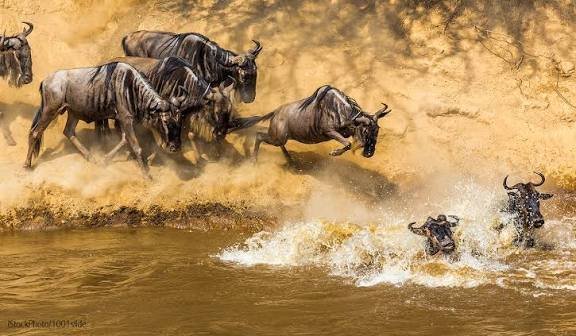
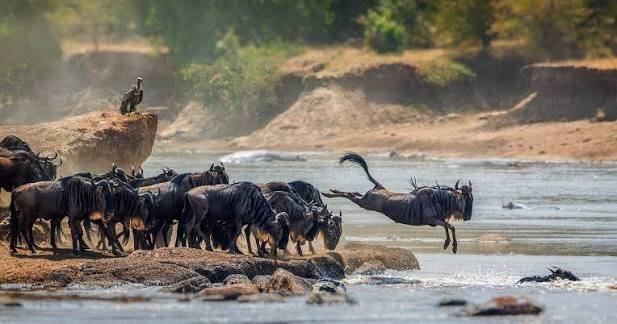
- River Crossings (July – October): The herds reach the northern Serengeti and face the final, most dramatic hurdle: the Mara River. Watching thousands of wildebeest plunge into the river, dodging crocodiles and the risk of drowning, is one of the most heart-stopping spectacles in the natural world .
- The Return South (November – December): The short rains begin, and the herds start their journey back to the southern plains, completing the cycle .
A Sanctuary of Unparalleled Wildlife
Beyond the migration, the Serengeti boasts the greatest concentration of large mammals in the world . This incredible biodiversity supports a complex web of life, making it one of the best places on earth for wildlife viewing.
- The Big Five: The park is a stronghold for the Big Five—lion, leopard, elephant, buffalo, and rhino—offering exceptional opportunities to see them in their natural habitat .
- Predator Capital: With an estimated 3,000 lions, the Serengeti has one of the highest lion populations in Africa . It is also home to large populations of spotted hyenas, leopards, and cheetahs, creating a dynamic predator-prey ecosystem .
- Plains Game: Vast herds of zebra, Thomson's gazelle, and other antelope species form the foundation of the food chain, moving in sync with the migratory herds .
- Birdlife: With over 500 species recorded, including 34 raptors and six species of vultures, the Serengeti is a paradise for birdwatchers .
A History of Conservation and Challenge
Established as a national park in 1951, the Serengeti's protected status has been crucial in safeguarding this ecosystem . However, its history is not without challenges. The park has faced threats from poaching, disease epidemics, and encroaching human populations .
- Human-Wildlife Conflict: The growing human population on the park's borders has led to habitat encroachment and an increase in bushmeat poaching, with an estimated 200,000 animals being killed annually in the wider ecosystem .
- Disease and Predation: The wild dog population disappeared in 1991, likely accelerated by rabies spread from domestic dogs, and an epidemic of canine distemper in 1994 killed 35% of the lion population .
- The Future: Despite these challenges, the Serengeti remains a global conservation success story, sustained by anti-poaching patrols, sustainable tourism, and collaborative efforts with local communities .
Planning Your Serengeti Adventure
A visit to the Serengeti is a journey into a world that feels as old as time. Whether you choose to drive from Arusha on a scenic 7-8 hour road trip or fly directly to one of the park's airstrips, the adventure begins the moment you enter the gates . Expert guides are essential to navigating the vast landscape and tracking wildlife movements, ensuring you experience the Serengeti at its most authentic .