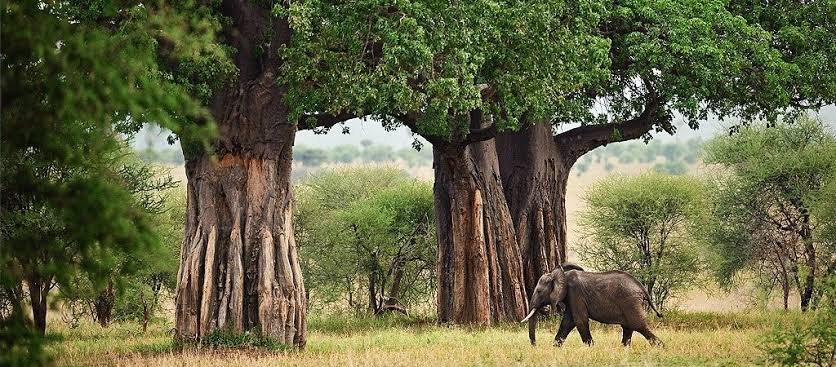
To visit Tarangire is to step into a landscape that feels ancient and otherworldly, shaped by the presence of its most iconic residents: the mighty baobab trees. These are not simply trees; they are monumental living monuments, deeply woven into the fabric of the ecosystem and the experience of the park itself.
The "Upside-Down" Giants
The baobab's appearance is so strange it has inspired legends for centuries. With their massive, silvery-grey trunks and sparse, root-like branches stretching towards the sky, they look as if they were planted upside down. One local legend tells of a proud tree that displeased the gods, who punished it by yanking it from the earth and replanting it with its roots in the air.
| Feature | Description |
|---|---|
| Shape | Thick, bottle-like trunks with contorted, root-like branches, giving it the nickname "upside-down tree". |
| Size | Can reach up to 30 meters (98 feet) in height, with trunks so wide they require over 10 people to encircle. |
| Age | Many are ancient, with estimates ranging from 500 to over 2,000 years old. Some are believed to be among the oldest living things on Earth. |
A "Tree of Life" in a Harsh Environment
Known as the "Tree of Life," the baobab is a marvel of adaptation. It thrives in the harsh, dry conditions of Tarangire due to its unique physiology:
- Water Storage: Its massive trunk acts like a giant sponge, capable of storing up to 2 tons (approximately 300 gallons) of water to survive long periods without rain. This makes it a vital resource during the dry season.
- Unique Wood: The living tissue makes up the entire trunk, making it resilient to fire and elephant damage. No matter how much an elephant gouges the bark, there is always living tissue behind it to keep the tree functioning.
- A Shelter for All: These trees are not just sources of water. They serve as shelters for animals like leopards, bush babies, and bees, and are essential nesting sites for birds like hornbills.
Nature’s Engines and a Bittersweet Future
The baobabs are not passive features of the landscape; they are dynamic engines of life. Their flowers open at night, and their powerful scent attracts fruit bats and bushbabies, which are their main pollinators. The fruit, known as "monkey bread," is a food source for many animals. This enduring relationship with wildlife, particularly the massive elephant herds of Tarangire, has existed for tens of thousands of years.
However, a lingering mystery shrouds these giants. In Tarangire, it has been observed that almost all the baobabs are between 500 and 900 years old, with very few young trees to replace them. This suggests a regeneration problem, possibly linked to grazing habits or changing environmental conditions, meaning this iconic landscape could face a distant but uncertain future.