The Ngorongoro Crater is not merely a tourist destination; it is a self-contained world, a geological marvel, and a sanctuary for an extraordinary concentration of wildlife. Often referred to as Africa's "Garden of Eden," it is a place where history, nature, and culture converge in a spectacular setting that has few equals anywhere on earth. This ancient caldera represents one of the most remarkable natural wonders on the planet, drawing visitors from every corner of the globe who seek to witness its unparalleled beauty and biodiversity.
A Geological Masterpiece
Formed approximately 2.5 million years ago, the Ngorongoro Crater is the world's largest unflooded and unbroken volcanic caldera. It was created when a massive volcano, which may once have rivalled the height of Mount Kilimanjaro, erupted and collapsed inward. The result is a natural amphitheatre that measures about 260 square kilometers and has walls that plunge 610 meters down to the crater floor. This immense depression is a testament to the raw power of the earth's geological forces, a reminder of the volcanic activity that once shaped this region of the Great Rift Valley.
The Volcano That Collapsed
The story of Ngorongoro begins about 3 million years ago, during a period of intense volcanic activity along the East African Rift System. At the site of today's crater, a colossal shield volcano began to form. Shield volcanoes are built by many layers of fluid lava flows and are known for their broad, gently sloping sides. This ancient mountain grew to an immense size, with some geologists estimating it may have once reached heights exceeding 5,000 meters, rivaling or even surpassing the height of Mount Kilimanjaro.
Then, about 2.5 million years ago, a cataclysmic event took place. The volcano had become so massive that it could no longer support its own weight. The magma chamber beneath the surface emptied, likely during a series of powerful eruptions, and the summit of the volcano collapsed inward in a massive implosion. Instead of exploding outward like a traditional eruption, the mountain fell in on itself, leaving behind a vast, bowl-shaped depression that would eventually become the Ngorongoro Crater.
The Birth of a Perfect Caldera
What remained was a caldera—a large volcanic crater formed by this kind of collapse. The resulting Ngorongoro Crater was not only enormous but also remarkably intact. Unlike many other calderas around the world, whose rims have been broken by later eruptions or flooded to become lakes, Ngorongoro's steep, unbroken walls remained largely intact. This geological perfection is what makes it so unique and allows for its self-contained ecosystem.
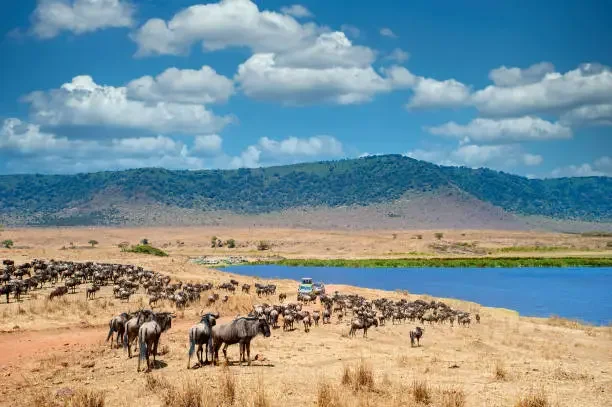
The crater's walls average 610 meters in height, creating a natural enclosure that has effectively become its own self-sustaining world. The crater floor, which sits at approximately 1,800 meters above sea level, is a diverse landscape of grasslands, swamps, acacia forests, and the shimmering soda lake, Lake Magadi. This varied terrain supports an incredible array of wildlife, making Ngorongoro one of the most biologically diverse areas in all of Africa.
An Unparalleled Ecosystem and Wildlife Sanctuary
The enclosed nature of the crater has created a unique, self-sustaining ecosystem. It supports over 25,000 large mammals, making it one of the most densely populated wildlife areas in Africa. This concentration of animals within a contained space makes for exceptional game viewing, where visitors are almost guaranteed to encounter a wide variety of species during a single game drive.
The "Big Five" and More
The Ngorongoro Crater is one of the best places in Tanzania to spot all of the "Big Five" in a single day. This legendary group—lion, leopard, elephant, buffalo, and the critically endangered black rhino—can all be found within the crater's walls, making it a dream destination for safari enthusiasts.
| Species | Population in Crater | Best Viewing Locations |
|---|---|---|
| Lions | ~60-70 resident lions | Throughout the crater floor, especially near water sources |
| Leopards | Elusive but present | Woodlands and along the crater rim forest |
| Elephants | Widespread, often in family groups | Forests and open grasslands |
| Buffalo | Abundant, often in large herds | Grasslands and swamps |
| Black Rhinos | ~30 individuals | Remote areas near the Lerai Forest |
The Lions of Ngorongoro
The crater boasts one of the highest densities of lions in Africa. Approximately 60 to 70 lions live permanently within the caldera, forming several large prides that rule the crater floor. The lions here are notable for their distinctive black manes, a characteristic of the Crater Highlands region that sets them apart from lions found elsewhere in Tanzania. Watching these magnificent predators hunt across the open grasslands is one of the most thrilling experiences the crater has to offer.
The Critically Endangered Black Rhino
Ngorongoro Crater is Tanzania's best destination for seeing the critically endangered black rhino in its natural habitat. Approximately 30 individuals live within the crater, making it one of the last strongholds for this majestic species. They are most commonly spotted in the remote areas near the Lerai Forest, but sightings require patience and a trained eye. Being able to see a black rhino in the wild is an experience that stays with you forever, a reminder of the importance of conservation efforts in protecting these magnificent creatures.
Plains Game: The Foundation of the Ecosystem
Beyond the Big Five, the crater floor is home to vast numbers of herbivores that form the foundation of the ecosystem. Among the most common are:
- Zebras: Perhaps the most abundant species on the crater floor, often seen in large herds moving across the grasslands.
- Wildebeest: Also very common, usually found alongside zebras. Their numbers swell during the calving season.
- Gazelles: Thomson's and Grant's gazelles are graceful antelope found throughout the crater.
- Hippos: Abundant in the crater's lakes and swamps, including Lake Magadi and the Ngoitokitok Springs.
- Warthogs: Common and entertaining to watch, often seen trotting across the grasslands.
Birdlife Spectacle
The crater is also a birder's paradise with over 500 species recorded. The shallow, soda lake known as Lake Magadi at the center of the crater floor is a focal point, attracting thousands of pink flamingos and a variety of other waterbirds, creating one of the crater's most iconic and photogenic scenes.
| Bird Category | Examples |
|---|---|
| Waterbirds | Thousands of flamingos around Lake Magadi, pelicans, storks, kingfishers |
| Birds of Prey | Eagles, vultures, and secretary birds soaring above the plains |
| Ground Birds | Ostriches, bustards, guinea fowl, and crowned cranes |
| Colourful Birds | Lilac-breasted rollers, bee-eaters, sunbirds, and starlings |
The flamingos of Lake Magadi are one of the crater's most iconic sights. At certain times of the year, thousands of greater and lesser flamingos gather at the soda lake, creating a breathtaking spectacle of pink against the green crater floor. The contrast between the pink birds, the blue waters, and the green grasslands creates some of the most beautiful photographic compositions in Tanzania.
The Soda Lake: Lake Magadi
At the heart of the crater floor lies Lake Magadi, a shallow, alkaline soda lake that is central to the crater's ecosystem. This lake is a vital water source for many animals and is particularly famous for its flamingos. The lake's high alkalinity creates the perfect conditions for the blue-green algae that flamingos feed on, attracting thousands of these beautiful birds throughout the year.
The lake also supports a variety of other waterbirds, including pelicans, storks, and kingfishers. Hippos can often be seen wallowing in the shallow waters, while elephants and buffalo come to drink at its edges. The combination of wildlife, birdlife, and the stunning backdrop of the crater walls makes Lake Magadi a highlight of any visit to the crater.
The Lerai Forest
The Lerai Forest, located on the southeastern side of the crater floor, is a unique and ecologically important area. This forest of yellow-barked acacia trees provides critical habitat for a variety of wildlife, including the elusive leopard and the endangered black rhino. The forest also serves as a vital shade and water source during the dry season, attracting many animals seeking relief from the midday sun.
The Great Migration Connection
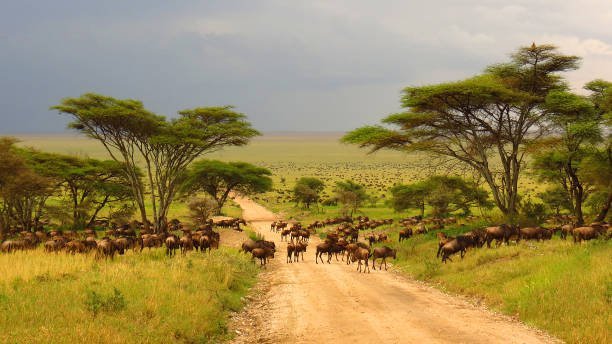
While the wildebeest herds of the Great Migration do not enter the crater itself, they travel through the wider Ngorongoro Conservation Area. Between January and March, over a million wildebeest gather on the short-grass plains just outside the crater to give birth, with approximately 400,000 calves being born in just a few weeks. This spectacular event draws in a huge concentration of predators, providing some of the most intense wildlife action on the continent.
The Ndutu region, located just outside the crater, is the epicenter of this calving season. Here, the herds gather in enormous numbers, attracting lions, cheetahs, leopards, and hyenas that prey on the vulnerable newborns. Witnessing this event is one of the most powerful wildlife experiences in the world, a raw display of nature's drama that visitors will never forget.
A Site of Human Significance
The Ngorongoro Crater offers more than just remarkable wildlife; it is a place of immense cultural and historical importance. The Ngorongoro Conservation Area is the ancestral home of the Maasai people, who continue to practice their traditional way of life, co-existing with the abundant wildlife.
The Maasai People
Draped in red shukas and adorned with intricate beadwork, the Maasai offer a warm welcome and a living reminder that humans and nature can coexist. Visitors may have the opportunity to visit a Maasai village, learning about their traditional pastoralist way of life, their customs, and their deep connection to the land.
The Maasai have grazed their cattle on these plains for over 200 years, moving their livestock in harmony with the great wildlife migrations. Their presence adds a rich cultural dimension to the Ngorongoro experience, making it a destination that offers not just wildlife and landscape but also a living cultural heritage.
The Cradle of Humankind
Beyond the crater rim lies Olduvai Gorge, often called the "Cradle of Mankind." This remarkable archaeological site has yielded some of the most significant discoveries in the history of human evolution. It was here that Louis and Mary Leakey made groundbreaking findings in the 1950s and 1960s, unearthing fossils and stone tools that trace human evolution back nearly 2 million years.
Nearby, at Laetoli, one of the most extraordinary archaeological discoveries ever made was found. In 1976, Mary Leakey's team discovered a trail of hominid footprints pressed into volcanic ash. These footprints, estimated to be approximately 3.6 million years old, provide the earliest evidence of upright walking (bipedalism) in human ancestors.
UNESCO World Heritage Status
Its unique blend of natural and cultural heritage led UNESCO to designate the Ngorongoro Conservation Area as a Mixed World Heritage Site in 2010. This distinction recognizes the area's extraordinary combination of wildlife, landscape, and cultural significance, making it one of only a handful of such sites worldwide.
Conservation and Sustainability
The Ngorongoro Conservation Area is managed to maintain the delicate balance between protecting the wildlife and allowing the Maasai people to continue their traditional pastoral lifestyle. This unique arrangement is a model for conservation that recognizes the importance of both nature and culture.
Visitor Numbers and Impact
The crater attracts over 500,000 visitors annually, making it one of the most popular destinations in Tanzania. Managing this large number of visitors while protecting the fragile ecosystem is an ongoing challenge. The Ngorongoro Conservation Area Authority implements various measures to minimize the impact of tourism, including:
- Vehicles Limit: Only 4x4 vehicles are allowed on the crater floor, and there is a limit of five vehicles per wildlife sighting.
- Operating Hours: The gates open at 6:00 AM and close at 6:00 PM, with the latest descent at 4:00 PM.
- Road Rules: Vehicles must stay on designated roads, and off-road driving is strictly prohibited.
Environmental Challenges
The crater faces various environmental challenges, including climate change, which threatens to dry up water sources and alter the landscape. The area's world-renowned flamingo population is considered at risk due to the severe drying of their feeding grounds in lakes across Tanzania, including those around the Ngorongoro Conservation Area. Additionally, the rapid growth of towns and villages on the crater rim, combined with encroaching agriculture, has led to deforestation and the creation of a significant buffer zone.
The Ngorongoro Experience
A visit to Ngorongoro Crater is a journey into a world that feels as old as time itself. The descent from the forested rim onto the crater floor is like stepping into a natural amphitheatre, where the drama of African wildlife unfolds before your eyes.
What to Expect
- Dawn Game Drives: Starting early is the best way to experience the crater. As the sun rises over the crater rim, the mist lifts to reveal the vast expanse of the crater floor below. Predators are still active from the night's hunt, and the morning light is perfect for photography.
- Wildlife Spotting: With the high density of animals, sightings are virtually guaranteed. Whether it is a pride of lions lounging in the grass, a lone elephant striding across the plains, or a black rhino grazing in the distance, there is always something incredible to see.
- Photography: The crater offers endless opportunities for photography, from the wide panoramas of the crater floor to the intimate moments between predators and prey. The contrast between the green grasslands, the blue waters of Lake Magadi, and the dramatic backdrop of the crater walls creates stunning compositions.
Tips for Visitors
- Plan at least two days in the crater: While a half-day visit is possible, spending more time allows for a more relaxed experience and better wildlife viewing.
- Visit during the dry season: June to October offers the best wildlife viewing conditions.
- Consider the green season: November to May brings lush landscapes, fewer crowds, and migratory birds.
- Take a guided tour: Professional guides know where animals tend to be and can enrich the trip with local knowledge.