One of the most frequent questions travelers ask when planning their Tanzanian safari is how to choose between Tarangire National Park and the Serengeti. While both parks offer world-class wildlife experiences, they are fundamentally different in character, scale, and what they deliver. The honest answer is that one is not "better" than the other—they serve different purposes and suit different types of travelers.
Size and Scale: The Big Difference
The Serengeti is vast, covering approximately 14,763 square kilometers—about five times larger than Tarangire . This enormous landscape requires patience and covering considerable distance to find wildlife. Visitors typically need a minimum of 3–5 days to explore the Serengeti meaningfully .
Tarangire, in contrast, is compact at just 2,850 square kilometers . Its manageable size means you can explore it well in just 1–2 days, making it an excellent choice for travelers with limited time or as a first stop on a longer Northern Circuit itinerary .
| Feature | Tarangire National Park | Serengeti National Park |
|---|---|---|
| Size | 2,850 km² | 14,763 km² |
| Annual Visitors | ~110,000 | ~350,000 |
| Signature Feature | Elephant herds, baobab trees | Great Migration, endless plains |
| The Great Migration | Not on the route | The main event |
| Best For | Elephants, baobabs, quiet experience | Migration, predator action, classic safari |
| Accessibility | 2 hours from Arusha | 5-6 hour drive or 1-hour flight |
| Park Fees (2026) | ~$62–$70 per person/day | ~$82 per person/day |
Wildlife: Elephants vs. The Great Migration
This is where the two parks diverge most dramatically.
Tarangire's signature experience is its elephants. During the dry season, herds of 200 to 300 elephants gather along the Tarangire River—one of the largest concentrations of elephants in Africa . The park holds over 3,000 elephants, the densest population in Tanzania . In a single afternoon, you might see more elephants than you would in three days in the Serengeti .
The Serengeti's crown jewel is the Great Migration. Over 1.5 million wildebeest, accompanied by hundreds of thousands of zebras and gazelles, move in a continuous annual loop across the ecosystem . The dramatic river crossings, when thousands of animals plunge into crocodile-infested waters, are among the most spectacular wildlife events on earth . If witnessing the Migration is on your bucket list, there is simply no substitute—the Serengeti is the destination.
Both parks offer excellent predator viewing, but in different ways. The Serengeti has one of the highest lion populations in Africa, and the famous Serengeti Lion Project has been tracking prides here since the 1960s . Tarangire's lion density is equally impressive in a smaller area, and the park has its own population of tree-climbing lions—a behaviour most safari-goers associate with Lake Manyara but found here as well .
Landscape: Baobabs vs. Endless Plains
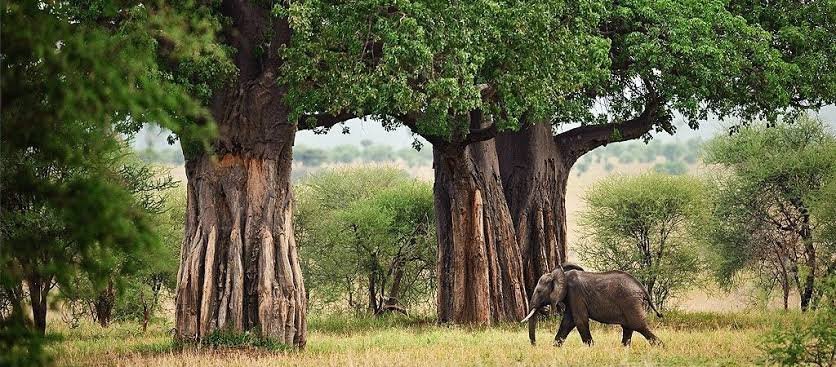
Tarangire's landscape is defined by its ancient baobab trees, some over 1,000 years old . Their massive, gnarled trunks create a prehistoric, otherworldly atmosphere that is unique in East Africa. A herd of elephants silhouetted against a sunset sky, framed by the twisted branches of a baobab, is one of the most iconic images in African wildlife photography .
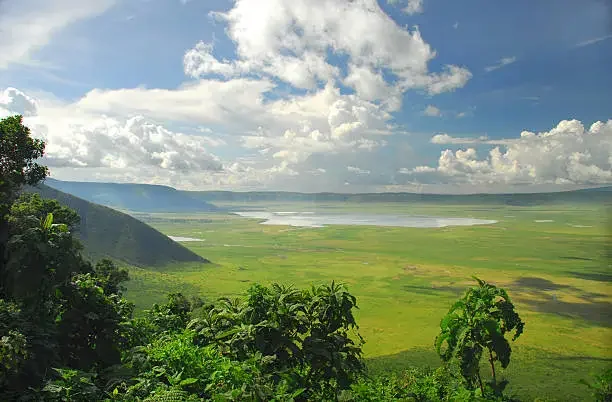
The Serengeti's landscape, by contrast, is defined by its endless golden savannah, dotted with granite kopjes (rocky outcrops) and riverine forests. It is the archetypal African landscape—the image that comes to mind when the world pictures Africa . While beautiful in its vastness, it lacks the dramatic foreground elements that make Tarangire photographs so distinctive.
Birdlife: Tarangire's Hidden Gem
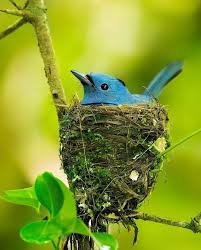
With over 550 recorded bird species, Tarangire has the highest bird diversity of any park on the Northern Circuit . Key highlights include the yellow-collared lovebird (endemic to Northern Tanzania), the ashy starling (near-endemic), and powerful raptors such as martial eagles and bateleurs .
The Serengeti is excellent for raptors and grassland birds, but Tarangire's habitat diversity—from riverine forests and swamps to acacia woodlands—gives it the edge for overall species count . For birders, visiting Tarangire during the green season (November to May) adds migratory species to the already impressive resident list.
Cost and Crowds: The Practical Differences
Tarangire is the more economical choice. Park fees are approximately $20 less per person per day compared to the Serengeti, and the park's proximity to Arusha significantly reduces transfer costs . A 4-day Tarangire and Ngorongoro safari typically starts from $1,400–$1,800 per person, while an equivalent Serengeti itinerary begins from $1,800–$2,400 per person .
Tarangire also offers a quieter safari experience. It receives significantly fewer visitors than the Serengeti or Ngorongoro. You may see few or no other vehicles on game drives even during peak season . The Serengeti, particularly during July to October, sees substantial visitor numbers, especially in the northern region around the Mara River crossings .
Which Park Should You Choose?
| Your Priority | Recommended Park |
|---|---|
| You have limited time (1-2 days) | Tarangire—easily accessible as a day trip from Arusha |
| You want to see large elephant herds | Tarangire—the densest elephant population in Tanzania |
| You want to witness the Great Migration | Serengeti—there is no substitute |
| You want classic safari photography | Tarangire for baobab silhouettes; Serengeti for endless plains |
| You're a birder | Tarangire—550+ species, highest diversity on the circuit |
| You want to combine with Ngorongoro | Both—most Northern Circuit itineraries include both parks |
The Bottom Line
Choose Tarangire when you have limited time, want to see large elephant herds in a compact area with fewer vehicles, or you're looking for a quieter, more intimate safari at a lower price point .
Choose the Serengeti when you have 3+ days, want to witness the Great Migration, or you're seeking the definitive, iconic safari experience with the highest predator density in Africa .
For most travelers, the answer is to visit both. The classic Northern Circuit itinerary typically includes 2 days in Tarangire, followed by 2–3 days in the Serengeti and a day in Ngorongoro Crater, offering the best of Tanzania's extraordinary wildlife.